30 Questions to Ask a Co-Packer Before You Sign (Food & Beverage Checklist)
The 30 questions to ask a co-packer or contract manufacturer before signing: MOQs, pricing, food safety, formula ownership, lead times, and red flags to avoid.
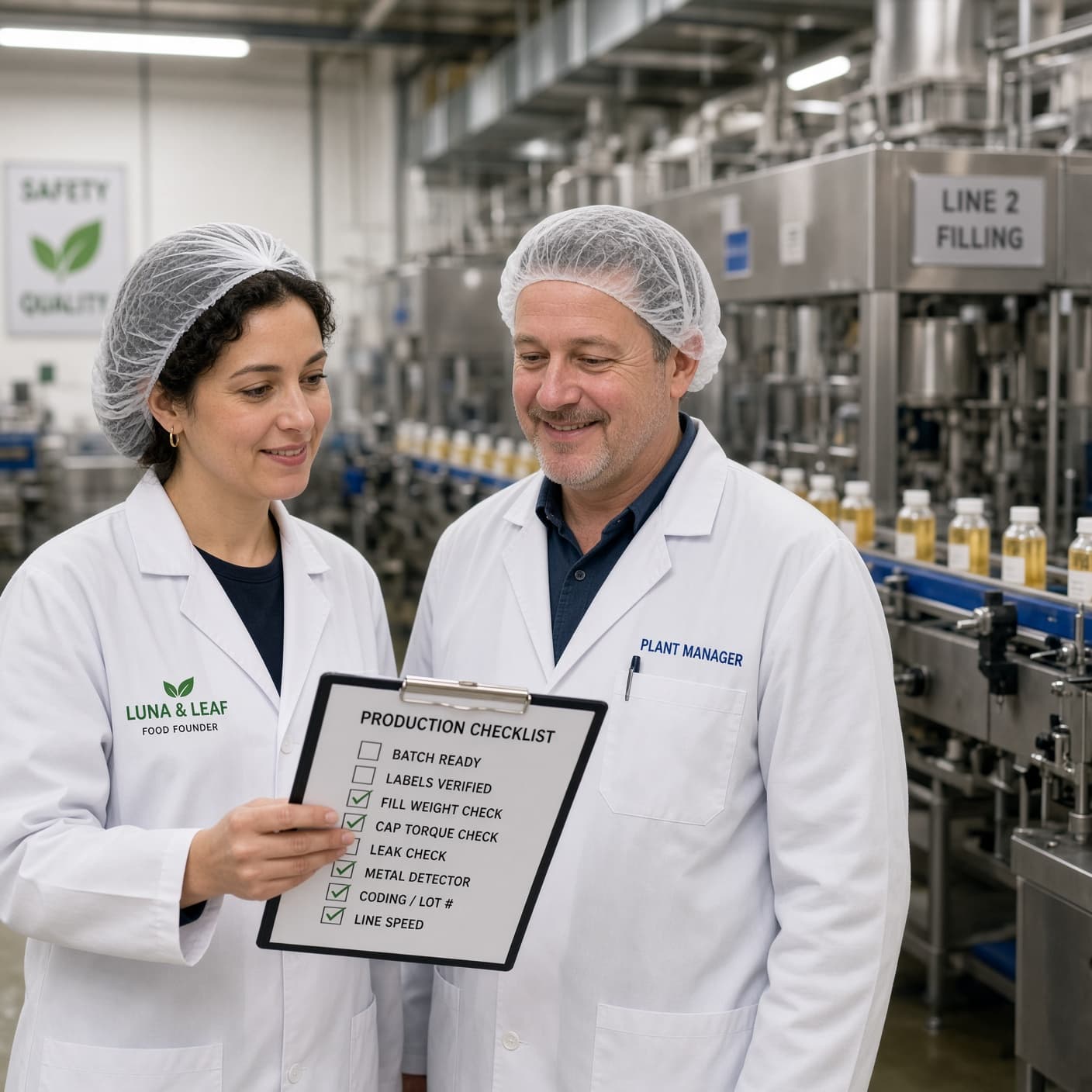
Picking a co-packer is one of the biggest decisions a food or beverage brand makes. The right partner can take you from test batch to national distribution. The wrong one can cost you months of runway, a recalled lot, or even control of your own recipe. The fastest way to tell them apart is to ask the right questions before you sign anything.
Below are 30 questions to ask a co-packer or contract manufacturer, grouped by topic, plus what a good answer sounds like and the red flags to walk away from. Print it, bring it to every intro call, and compare answers side by side.
Why the questions you ask a co-packer matter
Most brand–manufacturer relationships that fail do so for predictable reasons: mismatched minimums, unclear pricing, surprise lead times, weak food safety programs, or confusion over who owns the formula. Nearly all of these can be uncovered in a 30–45 minute call if you know what to ask. Asking detailed questions also signals to the manufacturer that you are a serious, prepared brand, which tends to get you better attention and better terms.
Capabilities & fit
Have you produced products like mine before? Look for direct experience with your format (beverage, sauce, bar, powder, baked good) and packaging type. Ask for non-confidential examples.
What equipment would my product run on, and what is its capacity? You want to know whether your product fits their existing lines or requires new tooling.
Which packaging formats and sizes can you fill? Cans, glass, PET, pouches, jars, sachets, cartons. Confirm the exact size you plan to sell.
Do you handle allergens, and how are they controlled? If your product is allergen-free, ask whether the facility runs the "Big 9" allergens and how changeovers are validated.
Can you support claims like organic, non-GMO, kosher, halal, or gluten-free? Certifications belong to the facility. If they are not certified, you cannot make the claim.
What size brands do you typically work with? A plant built for large national brands may deprioritize a startup; a very small shop may not keep up when you scale.
Minimums, pricing & payment
What is your minimum order quantity (MOQ) per SKU and per run? Ask whether the MOQ is per flavor, per batch, or per production day.
How is pricing structured? Clarify whether quotes are a per-unit tolling fee only, or a turnkey price that includes ingredients and packaging.
What costs sit outside the per-unit price? Setup and changeover fees, line trials, R&D time, lab testing, storage, pallets, and shrink/waste allowances commonly appear later. See our cost breakdown guide.
Who sources ingredients and packaging? If you supply them, ask about receiving requirements and who is liable for damaged or out-of-spec materials.
What are your payment terms and deposit requirements? Deposits for first runs are common; know the amount and when the balance is due.
How and when can prices change? Ask how ingredient, packaging, or tariff-driven cost increases are passed through.
Food safety, compliance & quality
Is your facility registered with the FDA (or USDA-inspected, if applicable)? This is the baseline. Meat and certain egg products fall under USDA FSIS rather than FDA.
Which third-party food safety certification do you hold? GFSI-benchmarked schemes such as SQF or BRCGS are often required by large retailers. Learn more in Food Safety Beyond FDA.
Can I see your most recent audit results and any corrective actions? A confident manufacturer will share a summary or certificate.
Do you have a written food safety plan (HACCP or FSMA Preventive Controls)? Ask who your product's preventive controls qualified individual will be.
What testing do you perform on each lot? Microbiological, pH, water activity, Brix, fill weight, and seal integrity checks vary by product type.
How do you handle lot coding, traceability, and recalls? Ask whether they have run a mock recall and how quickly they can trace a lot.
Will you provide a Certificate of Analysis (COA) with each run? Retailers and distributors frequently ask brands for COAs.
Do you carry product liability insurance, and can I be named as an additional insured? You will need your own policy too, but theirs should not be missing.
Formulation, IP & confidentiality
Will you sign a mutual NDA before I share my formula? This should be a yes.
Who owns the formula if your team helps develop or scale it? Get ownership in writing. Our guide to protecting your recipe covers what to include.
Can you scale my kitchen recipe to production, and what does that cost? Commercial scale-up can change taste and texture; ask how many iterations are included.
Do you support shelf-life testing? Ask whether they test in-house or through a partner lab. See shelf-life testing basics.
Production, timelines & logistics
What is your typical lead time from PO to finished goods? Separate the lead time for your first run from repeat runs.
Do you offer a pilot or trial run before a full commercial run? A pilot protects you from committing to large volumes on an unproven process. Read Pilot Run vs. First Commercial Run.
Can I attend the first production run? Being on the floor for run one is the best way to catch issues early.
What happens if a run fails quality checks? Clarify who pays for rejected product, rework, and replacement ingredients.
Do you offer warehousing and ship to distributors, retailers, or Amazon FBA? Ask about storage fees, pallet configuration, and retailer routing compliance.
Can you grow with me? Ask about available capacity at 2x, 5x, and 10x your first-year volume, and whether they have multiple facilities. See Scaling Production.
Red flags to watch for
They refuse to sign an NDA or insist on owning any formula they touch.
They can't name their food safety certification or won't share audit results.
Quotes are vague, verbal, or exclude obvious costs like setup or testing.
They push you to commit to a large first order with no pilot option.
Communication is slow or inconsistent during the sales process. It rarely improves after you sign.
They have no experience with your product format or packaging.
What to have ready before you call
Manufacturers respond faster and quote more accurately when you arrive prepared. Before your first conversation, have:
A product description, target format, and package size
Your formula or a commercial reference product (shared under NDA)
Estimated first-run and annual volumes
Required certifications and claims (organic, kosher, allergen-free, etc.)
Target launch date and sales channels
Our RFQ template walks you through each item, and the First Production Run Checklist picks up once you have chosen a partner.
Frequently asked questions
How many co-packers should I talk to before choosing one?
Most brands benefit from comparing three to five qualified manufacturers. That is enough to benchmark pricing, minimums, and lead times without stalling your launch.
What is the difference between a co-packer and a contract manufacturer?
The terms are often used interchangeably. A co-packer typically produces and packages your product using your formula, while a contract manufacturer may also offer formulation, sourcing, and broader production services. See Co-Packing vs. Co-Manufacturing vs. Private Label.
Should I get everything in writing?
Yes. Pricing, MOQs, lead times, quality specifications, formula ownership, and liability should all be captured in a manufacturing or supply agreement. Have an attorney review it before you sign.
Find co-packers that already fit your answers
Instead of cold-calling dozens of plants, tell USA Factory Network about your product and we'll match you with FDA-registered American manufacturers that fit your format, volumes, and certification needs. Prefer to browse first? Explore the manufacturer directory or our list of co-packing and private label manufacturers.