
Co-Packing vs. Co-Manufacturing vs. Private Label: Which Is Right for Your Food or Beverage Brand?
Clear comparison of co-packing, co-manufacturing, and private label production models for food and beverage brands. Learn the pros, cons, costs, control level, and which option best fits your stage, volume, and goals.
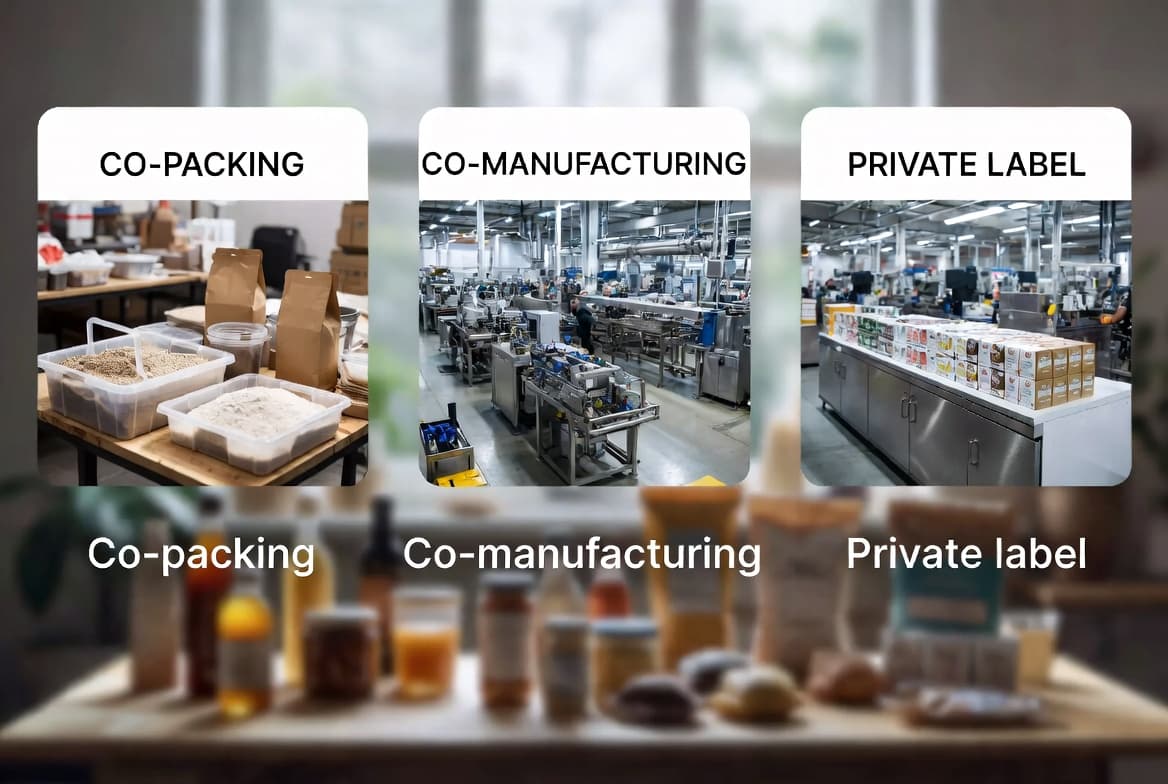
Co-Packing vs. Co-Manufacturing vs. Private Label: Which Is Right for Your Food or Beverage Brand?
Choosing how to manufacture your product is one of the most important early decisions a food or beverage brand makes. The three most common models — co-packing, co-manufacturing, and private label — each offer different levels of control, cost, speed, and brand ownership.
This guide breaks down the real differences so you can pick the right path for your stage, volume, and goals.
Quick Definitions
Co-Packing (Co-Packer): You supply the formula/recipe and often the ingredients. The manufacturer focuses on packaging and filling your product into your branded packaging.
Co-Manufacturing (Co-Man / Contract Manufacturing): You supply the formula/recipe. The manufacturer handles full production — sourcing ingredients (or using yours), processing, and packaging.
Private Label: The manufacturer creates and owns the recipe. You simply choose a product they already make and put your own label on it.
Side-by-Side Comparison
AspectCo-PackingCo-ManufacturingPrivate LabelFormula OwnershipYou own itYou own itManufacturer owns itIngredient SourcingUsually you supplyManufacturer (or you)Manufacturer onlyCustomizationHigh (your exact formula + packaging)Highest (full control over everything)Low (existing recipe only)Minimum Order QuantityUsually lowerMedium to highLowestSpeed to MarketFastMediumFastestCost per UnitHigher (you supply ingredients)MediumLowestBrand ControlVery highHighestLowestBest ForStartups testing recipesGrowing brands scalingQuick launch, testing markets
Pros & Cons of Each Model
1. Co-Packing
Best for: Early-stage brands, recipe testing, or when you already have suppliers locked in.
Pros:
Full control over your secret sauce
Lower minimums than full co-man
Faster setup if they already run similar products
Cons:
You handle ingredient procurement and logistics
Higher per-unit cost
More coordination required
2. Co-Manufacturing (Contract Manufacturing)
Best for: Brands ready to scale with their own unique formula.
Pros:
Complete control over recipe and final product
Manufacturer handles sourcing, production, and packaging
Easier to scale as volume grows
Strongest brand differentiation
Cons:
Higher minimum order quantities
Longer onboarding (formula validation)
Slightly higher upfront setup cost
3. Private Label
Best for: Brands that want to launch fast or test multiple products with minimal risk.
Pros:
Fastest time-to-market
Lowest cost and lowest minimums
No need to develop your own recipe
Cons:
Least differentiation (many brands may sell the same base product)
Limited ability to customize
You don’t own the formula
How to Decide Which Model Is Right for You
Ask yourself these 5 questions:
Do I have a unique, proprietary formula? → Co-Man or Co-Packing
What is my current monthly volume and 12-month projection?
How quickly do I need to launch?
How important is full brand differentiation?
Do I have the bandwidth to manage ingredient sourcing?
Pro Tip: Many brands start with private label or co-packing to validate the market, then switch to full co-manufacturing once they have proven demand.
Next Steps: Find the Right Partner on USA Factory Network
No matter which model you choose, the fastest way to success is working with the right FDA-registered manufacturer.
Browse Co Packers and Private Label Manufacturers:
https://usafactorynet.com/directory?category=Co-Packing+%26+Private+Label
Or fill out our quick Manufacturer Match Request and we’ll connect you with partners that match your exact needs.