
Understanding MOQs, Lead Times & Pricing: How to Forecast Costs Realistically
Learn how Minimum Order Quantities (MOQs), production lead times, and true landed costs work with U.S. contract manufacturers. Practical examples by category, forecasting tips, and strategies to avoid cash-flow surprises when launching or scaling food & beverage products.
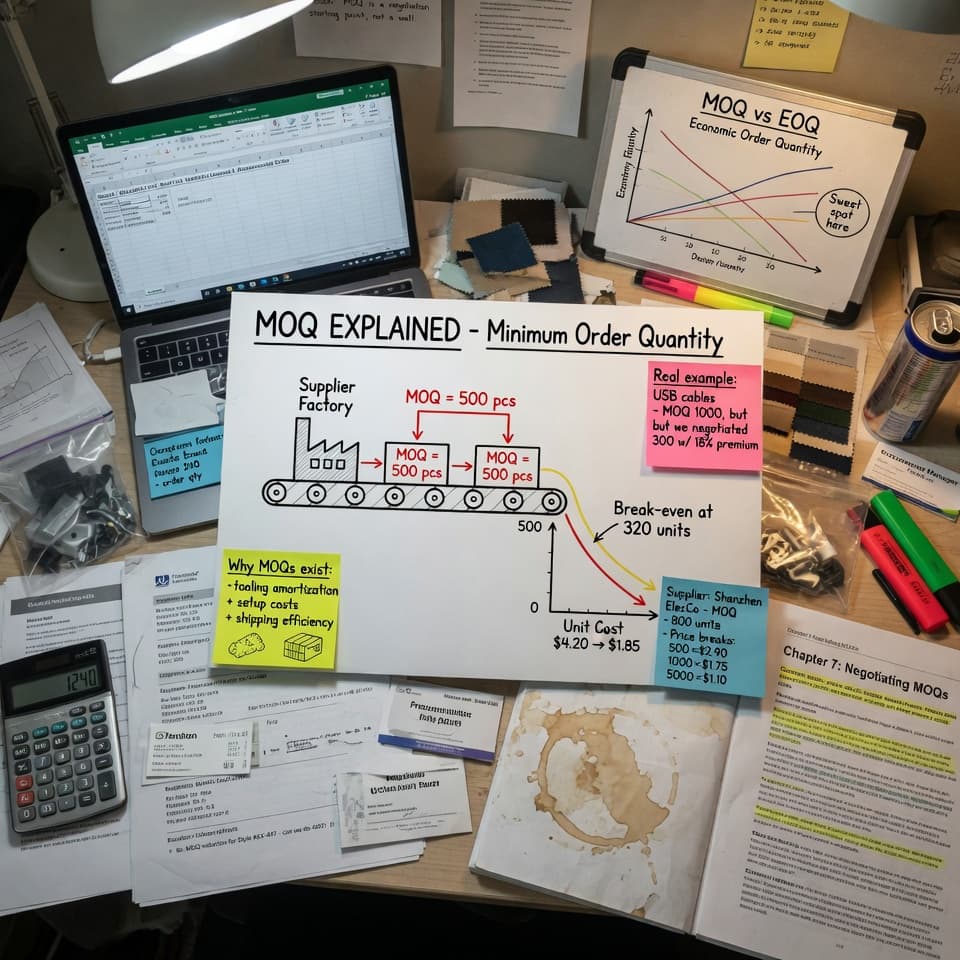
One of the most common reasons new food and beverage brands miss their launch dates or blow their budgets is underestimating how Minimum Order Quantities (MOQs), lead times, and pricing structures actually work with contract manufacturers. Getting these three pieces right early lets you build realistic financial models and avoid nasty surprises.
What Is an MOQ and Why Do They Exist?
An MOQ is the smallest production run a co-packer will accept in a single batch. Manufacturers set MOQs because every line changeover (cleaning equipment, swapping ingredients, retooling packaging) costs time and money. Small runs are simply uneconomical for them.
Typical MOQs in U.S. Food & Beverage (2026 benchmarks)
Beverages (bottles/cans): 1,000–10,000+ units per SKU (often quoted in cases)
Sauces, dressings, marinades: 500–5,000 units or 1,000+ lbs
Snacks, bars, granola, dry mixes: 5,000–25,000 units
Low-MOQ or pilot-friendly co-packers exist for many categories (some start at a few hundred cases), but expect higher per-unit pricing
Pro Tip: Always ask about both production MOQ (what the co-packer runs) and packaging MOQ (what your bottle/label supplier requires). They are often different.
Realistic Lead Times – Build These Into Your Timeline
Sampling / trial runs: 4–8 weeks
First commercial production run (after formula approval): 6–12 weeks (includes sourcing ingredients and packaging)
Repeat runs (once materials are stocked): 3–6 weeks
Seasonal demand, custom packaging, or ingredient shortages can add weeks. Always add a 20–30% buffer on your first few runs.
How Co-Packers Actually Price Production
Most quotes fall into one of these models:
Per-unit pricing (most common and easiest to forecast)
Line-time / hourly rate + setup fees
Turnkey (they source everything) vs. tolling (you supply raw materials and packaging)
Unit pricing almost always improves as volume increases. Ask for quotes at three tiers: small pilot run, medium commercial run, and scaled-up volume.
How to Build a Realistic Landed-Cost Forecast
Your true cost per unit includes far more than the co-packer’s invoice:
Raw ingredients & sourcing
Packaging materials (bottles, labels, trays, shippers)
Co-packer fees (production + any setup/storage fees)
Freight from manufacturer to 3PL or warehouse
Lab testing, shelf-life studies, and compliance
Insurance, recalls, and potential obsolescence
Action Steps for Better Forecasting
Get quotes from 3–4 manufacturers and compare apples-to-apples
Negotiate storage terms and payment schedules early
Use volume-tier pricing to model how your margins improve as you scale
Build a simple spreadsheet that includes all six cost categories above
Understanding these numbers upfront turns “I hope this works” into “Here’s exactly what my break-even looks like.” Use our Manufacturer Directory to filter partners whose MOQs and capabilities match your current stage.